 Class Notes NCERT Solutions for CBSE Students
| School Name: | St. Margaret Sr. Sec. School, D-Block, Prashant Vihar, Sector 14, Rohini, New Delhi 110085 India |
| Class: | XII Standard (CBSE) – Mid-Term |
| Subject: | English Core (301) |
| Exam: | Mid Term (2026–27) – Set A |
| Time: | 3 Hours |
| Maximum Marks: | 80 |
Mid-Term Examination (2026–27)
ENGLISH CORE (301)
Class XII
SET – B
General Instructions:
- The Question Paper contains THREE sections – READING, WRITING and LITERATURE.
- Attempt questions based on specific instructions for each part.
- Do not cross the prescribed word limit.
Section – A Reading: 22 Marks
Question 01: Read the given passage and answer the questions that follow. (10 Marks)
(1) People below the age of 20 and above the age of 50 are more likely to believe fake news. Those relatively new to the use of the internet still do not grasp the concept of fake information over these platforms, reveals a new survey ‘Countering Misinformation in India’. This survey has been conducted jointly by the Internet and Mobile Association of India (IAMAI).
(2) At least 40% of the respondents believed in ‘misinformation’ received over social media if it came with leading backgrounds and evidence, while 34% of them believed the information when it was shared by a trustworthy organisation.
(3) The dominant factor that drives people to forward such information is their belief that it might benefit others and help in their safety. In fact, that was the response of almost 50% of the respondents. This was compounded by the fact that at least 20% of the respondents expressed their lack of trust in conventional media, thus their faith in content shared by common people over social media.
(4) But even then, newspapers still remain the top source of information for most. At least 53% of the respondents trust what is generally perceived as neutral media, and only 29% trust technology and social media platforms.
(5) However, what was surprising was that almost 45% of the respondents did not even know about the existence of fact-checking organisations, and most did not even know that journalists had to verify data before they let it out. Only 26% of the respondents believe that it is the responsibility of the media to curb or identify fake news. Many Respondents also put the responsibility of identifying such fake news on an individual.
(6) The survey has found that first-time or early users of the Internet platforms are more susceptible to fake news than others. There is a need for building capacities and creating a National Civic Digital Literacy Strategic Plan.
Answer the following questions, based on the given passage:
(i) Select the option that comes under conventional media: (1)
- Newspaper
(ii) Select the correct option: (1)
One factor that prompts people to believe fake news is that
- It supports their point of view
- They are biased
- It is from a reliable site
- It has more ‘likes’ and ‘shares’
(iii) What, according to the passage, are the intentions of people who share information? (1)
(iv) Why is it important for journalists to give authentic background and evidence in their reporting? (1)
(v) Complete the sentence appropriately: (1)
The threat faced by the new entrants in social media is __________.
(vi) Explain your understanding of the difference between ‘misinformation’ and ‘fake news’. (1)
(vii) As per your inference drawn from para (1), which category of people fall as victims to fake news? (2)
(viii) What is the blame game that goes on in fixing the onus of identifying fake news? (2)
Question 02: Read the given passage and answer the questions that follow. (12 Marks)
(1) Five enterprises received approval and grants for prototype development of sustainable educational toys.
(2) The government authorities, educational institutions and EdTech start-ups are planning to introduce state-of-the-art, made-in-India educational toys that not only throw light on Indian values and civilisations but also help in developing children’s critical thinking and decision-making skills.
(3) “One such enterprise is working on different types of projects that can teach children how electromagnets and magnetic fields work. These projects can resolve a lot of issues in many schools in tier two and three cities that don’t have proper infrastructure. Another is working on an excavation site to teach children about ancient Indian civilisations. It has implanted a few artefacts at the site, which the children will have to find so that they are able to learn how to preserve and label artefacts. Another startup has proposed to create miniaturised labs for schools in tier 2 and 3 cities where children can learn concepts of physics. “We will ensure that these prototypes are developed within a year, and then the production can be scaled up,” says the senior manager of the project talking about the importance of indigenously built educational toys.
(4) Playtime is vital for the cognitive development of children, and toys are an essential component that helps enhance specific cognitive abilities and skill sets. “Well-designed toys ignite students’ curiosity, increase focus and can be very beneficial in helping them master a skill and enhance understanding. These can be in the form of visuals, auditory aids, kinaesthetic, or a mixture of all three. ” says HOD, Early Childhood Education.
(5) Toys offer an engaging avenue to teach mathematical, verbal, and problem-solving skills. “Toys that engage students in experiential learning enhance their spatial awareness and fine motor skills. Those designed for two or more players help students develop better social skills as they learn to negotiate, settle differences, etc with their peers.”
(6) Experiential gadgets and toys enable students to learn faster and retain knowledge. A child’s interest is piqued when he is taught in a contextual framework as opposed to rote learning. The Indian education system has been witnessing several innovations with the development of learning toys and gadgets that can be used and felt in person or through VR platforms across different subjects, be it science, technology, mathematics or engineering.
Answer the following questions, based on the passage given above:
(i) By tier 2 and tier 3 cities, the author refers to (1)
- Metro cities
- Cities with huge populations
- Underdeveloped cities
- Cities with less population
(ii) Complete the sentence with evidence from the text. (1)
The made-in-India educational toys serve the dual purpose of __________.
(iii) The author’s point of view that can be inferred from the above passage Is that (1)
- Educational toys are the booming business.
- Educational toys are meant to entertain children.
- Educational toys will replace teachers.
- Educational toys will make education more pragmatic.
(iv) Complete the following sentence appropriately: (1)
Educational toys enhance the personality of children by: __________.
(v) Read the five headlines 1 to 5, given below: (1)
- Sustainable educational toys are developmentally appropriate.
- Sustainable educational toys promote free play.
- Sustainable Educational Toys – Free and Widespread.
- Sustainable Educational Toys – Experiential Learning.
- Sustainable educational toys hinder interaction with people.
Identify the option that displays the headline that DOES / DO NOT corresponds with what the passage highlights.
- only (5)
- (1) and (2)
- (3) and (5)
- only (4)
(vi) What evidence do you gather from the passage to state that educational system is revolutionised by educational toys? Answer in about 40 words. (2)
(vii) Explain in about 40 words how education at the grassroots level is benefitted by these projects.
(viii) As opposed to learning by heart, experiential toys __________: (1)
- ignite interest
- challenge the teachers
- replace textbooks
- confuse learners
(ix) Playing is usually considered a distraction. Is it justified on the part of the narrator that playing is an important aspect of education? Write your answer in about 40 words. (2)
Section – B Creative Writing Skills: 18 Marks
Question 03: As the President of the Dramatics Club of Modern School, New Delhi, Draft a notice inviting entries for an inter-house drama competition. on the theme “Shakespeare World”. (4)
Question 04: You are Ananya / Arjun, President of the Residents’ Society, Dehradun. Draft a notice informing the residents about a charity camp being organised in collaboration with a reputed NGO. Mention the date, time and other details. (4)
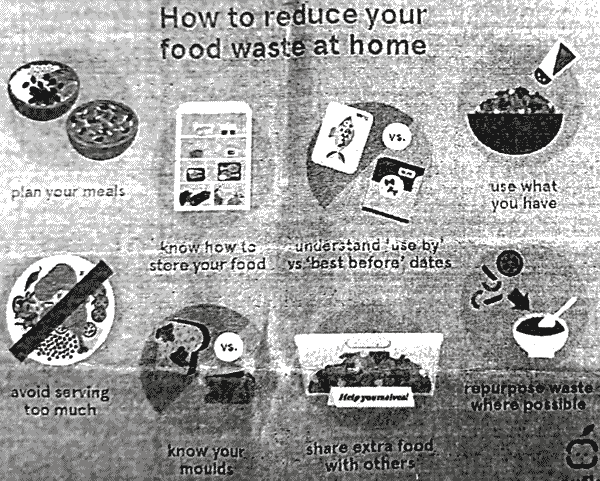
Question 05: Many people waste food despite widespread hunger and malnutrition. Write an article in 120-150 words on “Food Wastage: A Social and Moral Concern”. You are Simran / Sumit. (5)
OR
Recent advancements in artificial intelligence have raised concerns. about the future of human employment. Write an article in 120-150 words on “Will AI Replace Humans?”. You are Tanya / Tanmay. You may use the hints given below.
- AI lacks human emotions, empathy, and moral judgement.
- Creativity, critical thinking, and innovation are uniquely human strengths.
- Many professions require personal interaction, such as teaching, counselling, and customer service.
- AI can perform repetitive tasks faster and more accurately.
- Automation is replacing some jobs in manufacturing, customer service, and data entry.
- AI works continuously without fatigue or boredom.
Question 06: You are Neha / Nikhil of Lucknow. Write a letter to the editor of The Times of India highlighting the harmful effects of food adulteration and urging the authorities to conduct regular inspections. (5) 120-150 words.
OR
You are Amit / Amita, a resident of Amritsar, and write a letter to the Editor of The Tribune highlighting the issue of noise pollution in residential areas.
Section C – Literature Textbook And Supplementary Reading Text: 40 Marks
Question 07: Read the given extracts and answer the questions. (1×4)
(1) The reason the programme has been so successful is that it is possible to go anywhere near the South Pole and not be affected by it. It’s easy to be blasé about polar ice caps melting while sitting in the comfort zone of our respective latitude and longitude, but when you see glaciers retreating and ice shelves collapsing, you begin to realise that global warming is real. Antarctica, because of its simple ecosystem and lack of biodiversity, is a perfect place to study how little changes in the environment can have big repercussions.
(i) As per the given extract, the reason for the success of the programme is
- the participation of young students.
- the journey to Antarctica.
- the exposure to reality.
- It was impossible to go near the South Pole.
(ii) Complete the following sentence.
The warning that can be inferred from the above extract is __________.
(iii) State whether the statement given is TRUE or FALSE with reference to the extract.
Global warming is a threat to human survival.
(iv) Explain one inference that can be drawn from the line. “It’s easy to be blasé about polar ice caps melting while sitting in the comfort zone.”
OR
(2) From that day onwards it was celebration time for all the tigers inhabiting Pratibandapuram. The state banned tiger hunting by anyone except the Maharaja. A proclamation was issued to the effect that if anyone dared to fling so much as a stone at a tiger, all his wealth and property would be confiscated. The Maharaja vowed he would attend to all other matters only after killing the hundred tigers. Initially the king seemed well set to realise his ambition.
(i) Select the correct option:
‘He would attend to all other matters only after killing a hundred tigers.’ This reflects Tiger King’s:
- courage
- selfishness
- determination
- kindness
(ii) Complete the sentence appropriately.
‘From that day onwards it was celebration time for all the tigers.’ The above statement is ironical in the sense __________.
(iii) ‘… if anyone dared to fling so much as a stone at a tiger, all his wealth and property would be confiscated.’ What trait of the king is reflected in the above line?
(iv) State whether the following statement is TRUE or FALSE.
The king’s ambition is to save people from the tigers.
Question 08: Read the given extracts and answer the questions. (1×6)
(1)
but soon
put that thought away, and
looked out at Young
Trees sprinting, the merry children spilling
out of their homes, but after the airport’s security check,
Standing a few yards away, I looked again at her, wan, pale
as a late winter’s moon and felt that old
familiar ache, my childhood’s fear,
(i) Select the correct option. The impact of ‘merry children’ on the poet’s mind
- caused anxiety
- created a sense of longing
- brought comfort
- reminded her of her own childhood
(ii) The tone of the poet expressed in the above lines is
- sadness and helplessness
- excitement and eagerness
- appreciation and gratitude
- anger and anxiety
(iii) The words ‘wan’ and ‘pale’ indicate the mother’s __________.
(iv) Complete the following sentence appropriately.
The poet looked at her mother again to
(v) Explain one inference that can be drawn from the line ‘felt that old familiar ache’.
(vi) ‘put that thought away’. What is the intention of poet that can be inferred from the above line ?
OR
(2)
What I want should not be confused
with total inactivity.
Life is what it is about;
I want no truck with death.
If we were not so single-minded
about keeping our lives moving,
and for once could do nothing,
perhaps a huge silence
might interrupt this sadness
of never understanding ourselves
and of threatening ourselves with death.
(i) Which of the following themes is best represented in the given extract?
(A) Silence alleviates sadness of our life.
(B) Life and death are part of our existence.
(C) We must keep our lives moving.
(D) Life is stressful and monotonous.
(ii) State whether the following statement is True or False, with reference to the extract.
The poet feels that quiet productivity in place of all activities is desirable.
(iii) The sadness being referred to (line 9) is due to
(A) failure to understand ourselves.
(B) failure to understand others.
(C) loss of peers in life.
(D) inability to achieve what we desire.
Question 09: Read the given extracts and answer the questions. (1×6)
(1)
“Why do you do this?” I ask Saheb whom I encounter every morning scrounging for gold in the garbage dumps of my neighbourhood. Saheb left his home long ago. Set amidst the green fields of Dhaka, his home is not even a distant memory. There were many storms that swept away their fields and homes, his mother tells him. That’s why they left, looking for gold in the big city where he now lives. “I have nothing else to do,” he mutters, looking away. “Go to school,” I say glibly, realizing immediately how hollow the advice must sound. “There is no school in my neighbourhood. When they build one, I will go.”
(i) Choose the correct option
The expression ‘scrounging for gold’ refers to
(A) searching for gold items.
(B) looking for something that can fetch money.
(C) rummaging the garbage.
(D) digging to find food to eat.
(ii) The influence of nature in Saheb’s life was that it __________.
(A) brought prosperity
(B) yielded food for them
(C) gave them home
(D) brought disaster
(iii) Complete the sentence with an appropriate word.
Saheb’s conversation with the narrator draws __________________ of readers towards Saheb.
(iv) Explain one inference that can be drawn from the line.
“Go to school,” I say glibly, realizing immediately how hollow the advice must sound.
(v) The expression ‘when they build one, I will go’ indicates Saheb’s __________________ to go to school.
(vi) State whether the following statement is TRUE or FALSE.
‘His home is not even a distant dream’ states that Saheb sees his home often in his dream.
OR
(2)
“I heard M. Hamel say to me, ‘I won’t scold you, little Franz, you must feel bad enough, see how it is! Every day we have said to ourselves, Bah! I’ve plenty of time. I’ll learn it tomorrow. And now you see where we’ve come out. Ah, that’s the great trouble with Alsace; she puts off learning till tomorrow. Now those fellows out there will have the right to say to you, How is it; you pretend to be Frenchmen, and yet you can neither speak nor write your own language? But, you are not the worst, poor little Franz. We’ve all a great deal to reproach ourselves with.”
(i) ‘And now you see where we’ve come out.’
The tone of M. Hamel in the above line is that of:
(A) kindness
(B) happiness
(C) regret
(D) enthusiasm
(ii) ‘We’ve all a great deal to reproach ourselves with.’
Select the option, which conveys the meaning of ‘reproach’ as reflected in the above line.
(A) The player received a reprimand for breach of rules.
(B) The students approached the management with a demand for new canteen.
(C) The clerk received a letter of appreciation for his innovative ideas.
(D) She could not find a way to broach the subject with her boss.
(iii) State whether the following statement is true or false with reference to the extract.
M. Hamel endorses the belief that there is plenty of time to learn their language.
(iv) Complete the sentence appropriately.
‘You must feel bad enough.’ Through these words M. Hamel urges the people __________________.
(v) Identify the line from the text that reinforces the theme of patriotism in the story.
(vi) ‘She puts off learning till tomorrow.’ The phrase ‘puts off’ suggests __________________.
Question 10: Answer ANY FIVE of the following six questions, in about 40-50 words. (5X2)
(a) What is Mukesh’s dream? How is he different from the other children of Firozabad?
(b) What misadventure took place with Douglas at YMCA pool?
(c) What are the things that make us sad? (A Thing of Beauty)
(d) Why did the school appear like a quiet Sunday morning?
(e) Why do the ragpickers avoid wearing slippers?
(f) Why did the crofter help the peddler?
Question 11: Answer ANY TWO of the following three questions, in about 40-50 words. (2X2)
(a) Why did Charley run away from the Third level during his visit?
(b) How did the prediction of the late astrologer come true?
(c) What makes Antarctica a perfect place to study about the earth’s past, present and future?
Question 12: Answer ANY ONE of the following two questions, in about 120-150 words (5)
(a) Why did the peddler decide to choose the path of honesty?
(b) The two poems ‘Keeping Quiet’ and ‘A Thing of Beauty’ talk about the importance and wonders of nature in their own way. Describe how.
Question 13: Answer ANY ONE of the following two questions, in about 120-150 words (5)
(a) Describe Charley’s extraordinary experience at the Third Level.
(b) What steps did the Tiger King take to complete his target of killing the hundred tigers?