May 28, 2020
7th Class, Science
6,680
Soil 7th Class NCERT CBSE Science Chapter 09 Question: In how many groups the soil has been categorized? Name them. Answer: The soil has been categorized into four major groups, i.e. clay silt sand gravel Question: Which soil is considered to be the most fertile and used for growing crops? Answer: Loamy …
Read More »
May 28, 2020
7th Class, Science
6,555
Winds, Storms and Cyclones 7th Class NCERT CBSE Science Chapter 08 Question: Why is Chandigarh unlikely to be affected by a cyclone? Answer: Chandigarh is unlikely to be affected by a cyclone because it is not near to the sea or an ocean. Question: Discuss the major cause of winds. Answer: Wind …
Read More »
May 28, 2020
7th Class, Science
5,380
Weather, Climate and Adaptations of Animals to Climate 7th Class NCERT CBSE Science Chapter 07 Question: During rainy season, what do we use to protect ourselves from rainwater? Answer: We use umbrella or raincoat to protect ourselves from rainwater during rainy season. Question: A fish dies when taken out of water, whereas …
Read More »
May 26, 2020
7th Class, Science
8,600
Physical and Chemical Changes 7th Class NCERT CBSE Science Chapter 06 Question: What kind of change is shown by tearing of paper? Answer: Tearing of paper is a physical change although, it cannot be reversed. Question: Melting of wax is a change where a solid changes to liquid state. Give one more …
Read More »
May 22, 2020
7th Class, Science
7,527
Acids Bases and Salts 7th Class NCERT CBSE Science Chapter 05 Question: What is the test for acids and bases using litmus paper? Answer: Acids turn blue litmus paper red while bases turn red litmus paper blue. Question: What name is given to those substances which do not change the colour of …
Read More »
May 21, 2020
7th Class, Science
10,430
Heat NCERT 7th Class CBSE Science Chapter 04 Question: In a mercury thermometer, the level of mercury rises when its bulb comes in contact with a hot object. What is the reason for this rise in the level of mercury? Answer: As the temperature increases, then expansion in mercury takes place which …
Read More »
May 21, 2020
7th Class, Science
9,704
Fibre to Fabric NCERT 7th Class CBSE Science Chapter 03 Question: Name the sources of obtaining fibres. Answer: The sources of obtaining fibres are plants and animals. Question: Name some wool yielding animals. Answer: Wool yielding animals are sheep, yak, llama, alpaca, angora goat, angora rabbit and camel. Question: In which part …
Read More »
May 15, 2020
7th Class, Science
8,265
Nutrition in Animals NCERT 7th Class CBSE Science Chapter 02 Question: What is the total number of teeth in an adult human? Answer: In an adult human, there are total 32 teeth. Nutrition in Animals NCERT – Question: Name the parts of the alimentary canal where water gets absorbed from undigested …
Read More »
May 14, 2020
7th Class, Science
9,441
Nutrition in Plants 7th Class NCERT CBSE Science Chapter 01 Question: Why do organisms need to take food? Answer: All living organisms require food to survive. It gives them energy to perform various activities. All activities such as playing, running, walking, studying etc. require energy. The various components present in …
Read More »
April 29, 2020
8th Class, Science
17,588
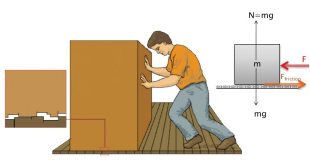
Friction: 8th Class NCERT CBSE Science Chapter 12 Question: What is friction? Answer: Friction is a force that slows down moving objects or prevents stationary objects from moving. Question: On what principle do ball bearings work? Answer: Ball bearing works on the principle of rolling friction. Ball bearing contains steel balls …
Read More »
 Class Notes NCERT Solutions for CBSE Students