 Class Notes NCERT Solutions for CBSE Students
| School Name: | St. Margaret Sr. Sec. School |
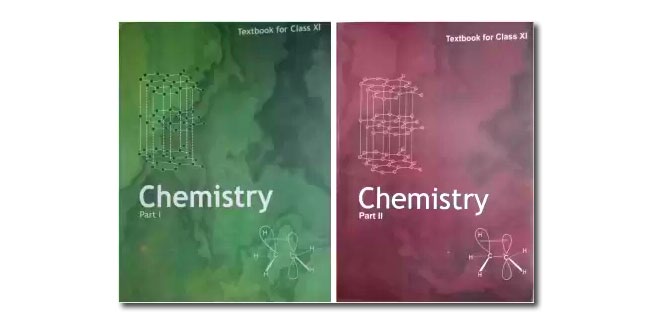
| Class: | XI |
| Subject: | Chemistry |
| Exam: | Annual Examination 2025–26 (Set-B) |
| Time: | 3 Hours |
| Maximum Marks: | 70 |
GENERAL INSTRUCTIONS
Read the following instructions carefully:
- There are 33 questions in this question paper with internal choice.
- SECTION A consists of 16 multiple-choice questions carrying 1 mark each.
- SECTION B consists of 5 very short answer questions carrying 2 marks each.
- SECTION C consists of 7 short answer questions carrying 3 marks each.
- SECTION D consists of 2 case-based questions carrying 4 marks each.
- SECTION E consists of 3 long answer questions carrying 5 marks each.
- All questions are compulsory.
- Use of calculators is not allowed.
SECTION – A
(1 Mark Each)
Question 1: The sum of 7.15, 10.345, 0.0556 in terms of significant figures:
- 17.5
- 17.55
- 17.550
- 17.5506
Question 2: Paschen series belong to:
- UV region
- IR region
- Visible region
- X-ray region
Question 3: Hydrogen bonds are formed in H₂O, HF, NH₃. The correct decreasing order of boiling points is:
- HF > H₂O > NH₃
- H₂O > HF > NH₃
- NH₃ > HF > H₂O
- NH₃ > H₂O > HF
Question 4: The oxidation number of Na in Na₂O₂ is:
- -6
- +1
- +3
- -2
Question 5: The IUPAC name of the given molecule is:
CH₃–C(=O)–C(CH₃)=C(CH₃)–C(=O)–OH
- 4-oxo-2,3-dimethyl pent-2-en-1-oic acid
- 2-carboxy-3-methyl pent-2-en-3-one
- 4-carboxy-3-methyl pent-3-en-2-one
- 2,3-dimethyl-4-oxo-pent-2-en-1-oic acid
Question 6: Which of the following molecules have square planar shape?
- SF₄
- NH₃
- PCl₅
- XeF₄
Question 7: What is the general electronic configuration of group 16 elements?
- ns²np²
- ns²np¹
- ns²np³
- ns²np⁴
Question 8: The correct thermodynamic conditions for spontaneous reaction at all temperatures is:
- ΔH < 0 and ΔS > 0
- ΔH < 0 and ΔS < 0
- ΔH < 0 and ΔS = 0
- ΔH > 0 and ΔS < 0
Question 9: For the reaction A(g) + B(g) → 2C(g), the relation between Kp and Kc is:
- √RT
- RT
- 1
- 1/RT
Question 10: Which of the following is not a state function?
- Enthalpy
- Heat
- Free energy
- Entropy
Question 11: Identify the correct expression for internal energy change for an isothermal process:
- ΔU = 0
- ΔU = −q
- ΔU = W
- ΔU = +q
Question 12: Which of the following is not an example of redox reaction?
- CuO + H₂ → Cu + H₂O
- Fe₂O₃ + 3CO → 2Fe + 3CO₂
- 2K + F₂ → 2KF
- BaCl₂ + H₂SO₄ → BaSO₄ + 2HCl
Directions (Questions 13–16):
(a) Assertion and reason both are correct and reason is correct explanation.
(b) Both are correct but reason is not correct explanation.
(c) Assertion is correct but reason is wrong.
(d) Assertion is wrong but reason is correct.
Question 13:
Assertion (A): Nitration of benzene with nitric acid requires concentrated sulphuric acid.
Reason (R): Mixture of conc. H₂SO₄ and HNO₃ produces NO₂⁺ (electrophile).
Question 14:
Assertion (A): A liquid crystallises into a solid with increase in entropy.
Reason (R): Entropy is a measure of disorder.
Question 15:
Assertion (A): n-butane and iso-butane are chain isomers.
Reason (R): Chain isomers differ in position of functional group.
Question 16:
Assertion (A): Electron gain enthalpy becomes less negative down a group.
Reason (R): Atomic size increases down the group.
SECTION – B
(2 Marks Each)
Question 17: How many grams of KClO₃ must be decomposed to prepare 3.36 litres of oxygen at STP?
Reaction:
2KClO₃(s) → 2KCl(s) + 3O₂(g)
Given: Atomic weights: K = 39, Cl = 35.5, O = 16
Question 18: Calculate the wave number of radiation emitted when an electron jumps from n = 4 to n = 2 in a hydrogen atom.
Question 19:
(i) Write the general electronic configuration of d-block elements.
(ii) Which of the following elements has most positive electron gain enthalpy and why?
F, N and Ne
Question 20: Give reason:
- He₂ molecule is not formed.
- Ethyl alcohol dissolves in water.
Question 21:
Calculate the oxidation number of Mn in K₂MnO₄ and S in S₂O₃²⁻.
OR
Define disproportionation reaction with an example.
SECTION – C
(3 Marks Each)
Question 22: Write the molecular orbital configuration of CO. Find its bond order and predict its magnetic behaviour.
Question 23:
- How many electrons will be present in a sub-shell having spin quantum number value of −1/2 for n = 4?
- Which of the following transitions will have minimum wavelength and why?
n₄ → n₁, n₄ → n₂, n₂ → n₁
(iii) Give the number of radial nodes for 3s and 2p orbitals.
Question 24:
The first (IE₁) and second (IE₂) ionisation energies (kJ/mol) of elements are given below:
| Element | IE₁ | IE₂ |
|---|---|---|
| I | 2372 | 5251 |
| II | 520 | 7300 |
| III | 900 | 1760 |
| IV | 1680 | 3380 |
Which of these elements is likely to be:
(i) a reactive non-metal,
(ii) a noble gas, and
(iii) a metal that forms a binary halide of formula AX₂?
Give reason in each case.
Question 25:
At 473 K, equilibrium constant Kc for decomposition of PCl₅ is 8.3 × 10⁻³.
Reaction:
PCl₅(g) ⇌ PCl₃(g) + Cl₂(g)
ΔH° = 124.0 kJ mol−1
- Write expression for Kc
- What is value of Kc for reverse reaction?
- What will be effect on Kc if:
- Pressure is increased?
- Temperature is increased?
Question 25 (continued):
- What will be the effect on Kc if pressure is increased?
- What will be the effect on Kc if temperature is increased?
OR
At 700 K, the equilibrium constant for the reaction:
H₂(g) + I₂(g) ⇌ 2HI(g)
Kc = 54.3. If 0.5 mol L−1 of HI(g) is present at equilibrium,
calculate the concentrations of H₂(g) and I₂(g), assuming initially only HI was present.
Question 26:
(i) Arrange the following alkenes in increasing order of stability (with reason):
CH₃–CH=CH₂, CH₃–CH=CH–CH₃, (CH₃)₂C=CH–CH₃
(ii) Write IUPAC names of:
- CH₃–CH=CH–COOCH₃
- CH₃–CO–CO–CH₃
Question 27:
Balance the following redox reactions by oxidation number or ion-electron method (Any three):
- MnO₄⁻ + I⁻ → MnO₂ + I₂ (in basic medium)
- MnO₄⁻ + SO₂ → Mn²⁺ + HSO₄⁻ (in acidic medium)
- H₂O₂ + Fe²⁺ → Fe³⁺ + H₂O (in acidic medium)
- Cr₂O₇²⁻ + SO₂ → Cr³⁺ + SO₄²⁻ (in acidic medium)
Question 28:
Write the reactions involved in:
- Friedel–Crafts acylation
- Wurtz reaction
- Decarboxylation reaction
SECTION – D
(4 Marks Each)
Question 29: Read the passage and answer the following:
Mole concept is fundamental in chemistry. One mole of any gas at STP occupies 22.4 L.
Amount of product depends on limiting reagent. One mole contains 6.022 × 10²³ particles.
Atomic mass in ‘u’ refers to mass of one atom, while in grams it represents Avogadro number of atoms.
Molarity equation M₁V₁ = M₂V₂ is not universally applicable in neutralisation reactions.
- How many helium atoms are present in 52 g of He? (He = 4 u)
- What is the mass of 5.6 L of O₃ at STP?
Question 29 (continued):
- 8.0 g of Mg is burnt in 2.0 g of O₂. Which is the limiting reactant and how much MgO will be formed?
[Mg = 24 u, O = 16 u]
OR
- What volume of 10.6 g L−1 aqueous solution of sodium carbonate is required to react with
25.0 mL of 0.1 H₂SO₄?
Question 30:
A covalent bond may be cleaved in heterolytic or homolytic fashion. A heterolytic cleavage yields
carbocations or carbanions, while homolytic cleavage produces free radicals.
Reactions involving heterolytic cleavage proceed via nucleophiles (electron pair donors)
and electrophiles (electron pair acceptors). Inductive, resonance, electromeric and
hyperconjugation effects influence bond polarization.
After purification, qualitative analysis is performed to detect elements present.
Nitrogen, sulphur, halogens and phosphorus are detected by Lassaigne’s test.
Carbon and hydrogen are estimated by CO₂ and H₂O formation.
Nitrogen is estimated by Dumas or Kjeldahl’s method and halogens by Carius method.
- Which of the following species act as nucleophiles?
NH₃, BF₃, NO₂⁺, C₂H₅O⁻ - Draw resonance structures of phenol.
- Give two differences between inductive effect and resonance effect.
OR
0.35 g of an organic compound was Kjeldahlised. The ammonia evolved was absorbed in
100 mL of M/10 H₂SO₄. The residual acid required 154 mL of M/10 NaOH for neutralisation.
Calculate percentage of nitrogen in the compound.
SECTION – E
(5 Marks Each)
Question 31:
(i) Complete the following reactions:
- CH₃CH₂Br + alc. KOH → ?
- CH₃CH=CH₂ + O₃ → ?
- CH₂=CH₂ + H₂O + [O] (dil. KMnO₄) → ?
(ii) Give mechanism of addition of HBr to propene based on Markovnikov’s rule.
OR
(i) –NO₂ group is meta directing whereas –OH group is ortho and para directing. Explain why.
(ii) How do you convert:
- CH≡CH → CH₃CHO
- Benzene → Toluene
(iii) Why does trans-2-butene have higher melting point than cis-isomer?
Page 5/6
Question 32:
- (i) A 0.1 M solution of acetic acid (CH₃COOH) has Ka = 1.8 × 10⁻⁵.
Calculate:- pH of the solution
- Degree of dissociation
- (ii) For the reaction:H₂(g) + I₂(g) ⇌ 2HI(g)At equilibrium, concentrations are:
[H₂] = 0.5 mol, [I₂] = 0.5 mol, [HI] = 2 mol
Calculate:
- Kc
- Kp
OR
- The value of Kc for the reaction:2A ⇌ B + C is 2 × 10⁻⁴At a given time:
[A] = [B] = [C] = 5 × 10⁻⁵ MPredict whether the reaction will favour formation of A. Justify your answer.
- Give structure and IUPAC name of isobutyl alcohol.
- The solubility of PbSO₄ in water is x. Calculate the solubility product constant (Ksp) of PbSO₄.
Question 33:
- Write the structures for two functional isomers having molecular formula C₄H₁₀O.
- Give structure and IUPAC name for isobutyl alcohol.
- For complete neutralisation of ammonia obtained from 2.8 g of an organic compound,
20 millimoles of H₂SO₄ were required.
Calculate the percentage of nitrogen in the compound.[Atomic masses: N = 14, S = 32, O = 16, H = 1]
OR
- In Carius method, 0.2 g of organic compound contains 40% sulphur by mass.
Calculate amount of BaSO₄ precipitate formed.[Ba = 137, S = 32, O = 16] - Explain +R and −R effect with suitable examples.